No BBS to run, no telnet client to hunt down, no server to keep alive. LORD, TradeWars, Usurper or any other 16-bit DOS door runs unchanged in the browser, sharing one world on ordinary PHP hosting.
Free · MIT licensed · download coming soon. Or just press the key
What a player sees
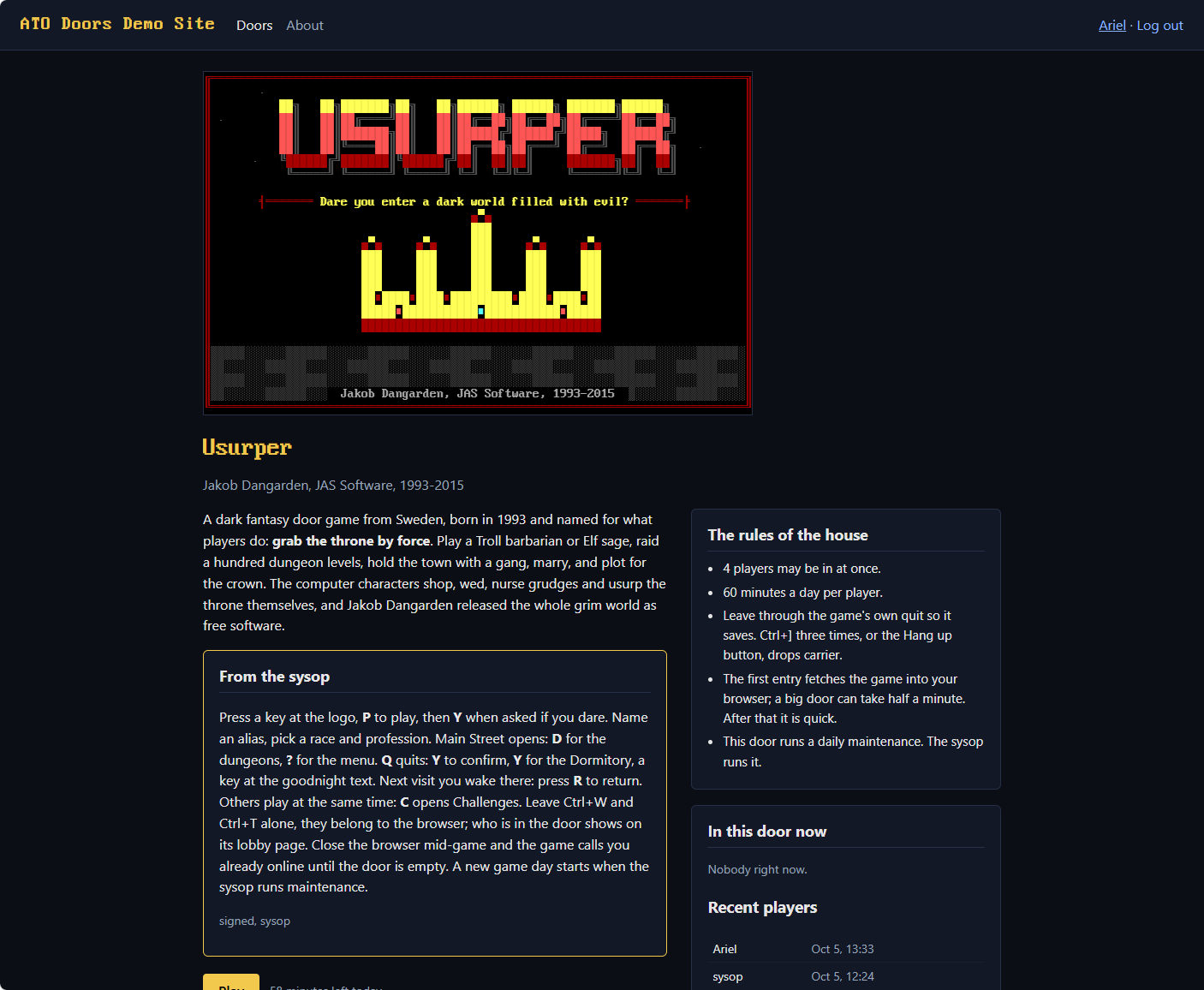
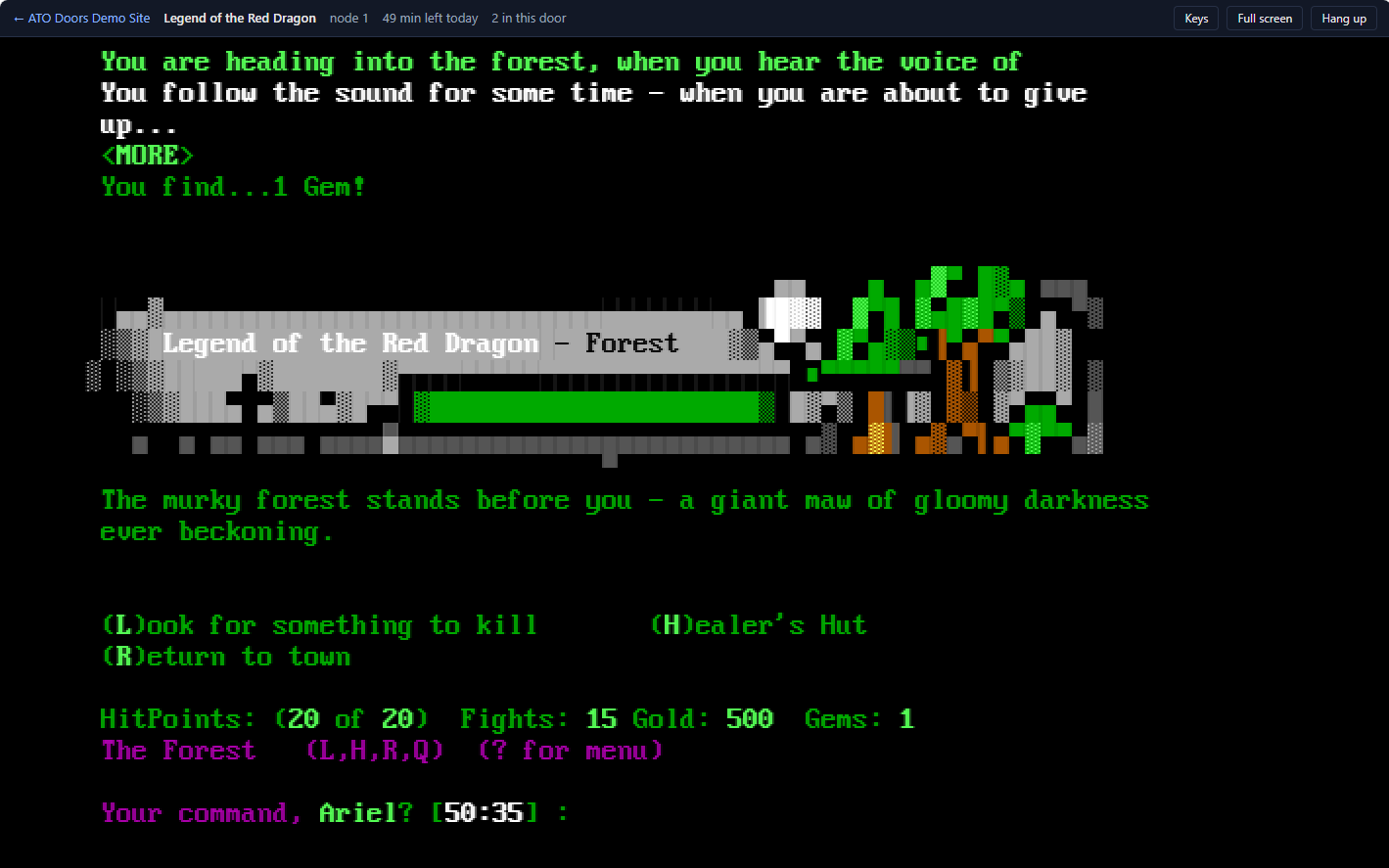
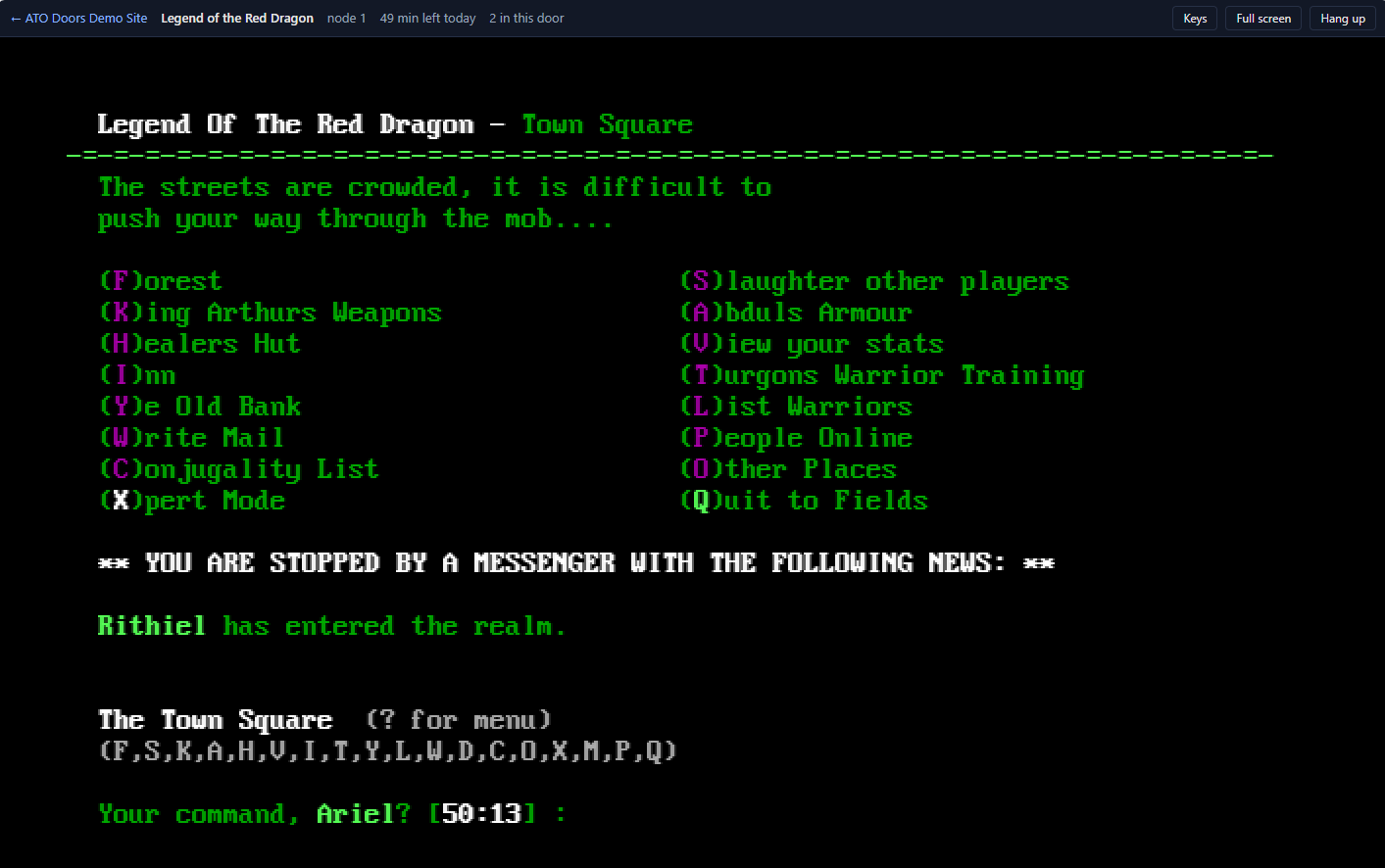
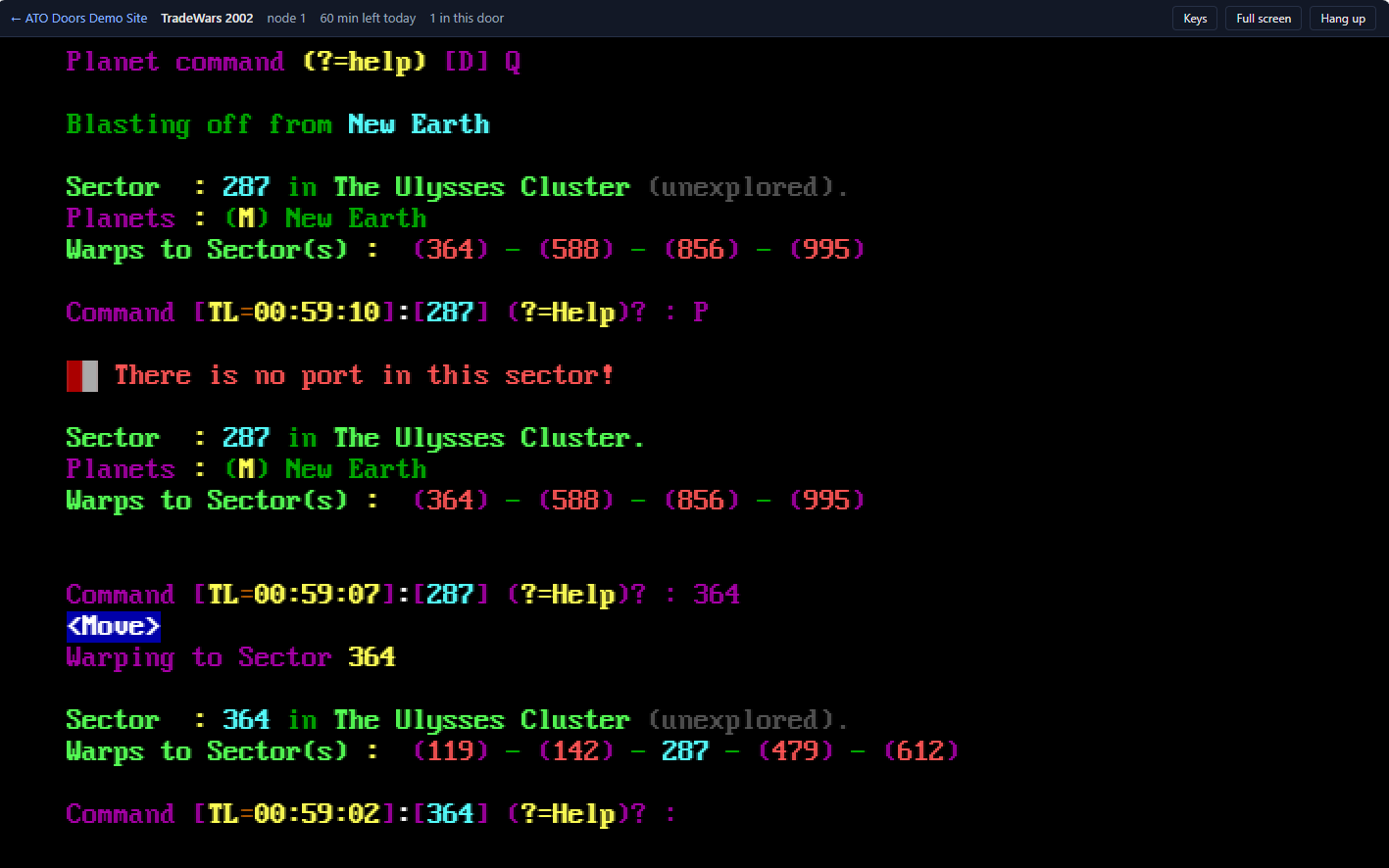
A lobby with a card for each door, who is in it right now and how many may play. Press Play and a terminal opens in the page, the modem does its little ceremony, and the game comes up in its own colors and its own font, with the keyboard doing what it did in 1995.
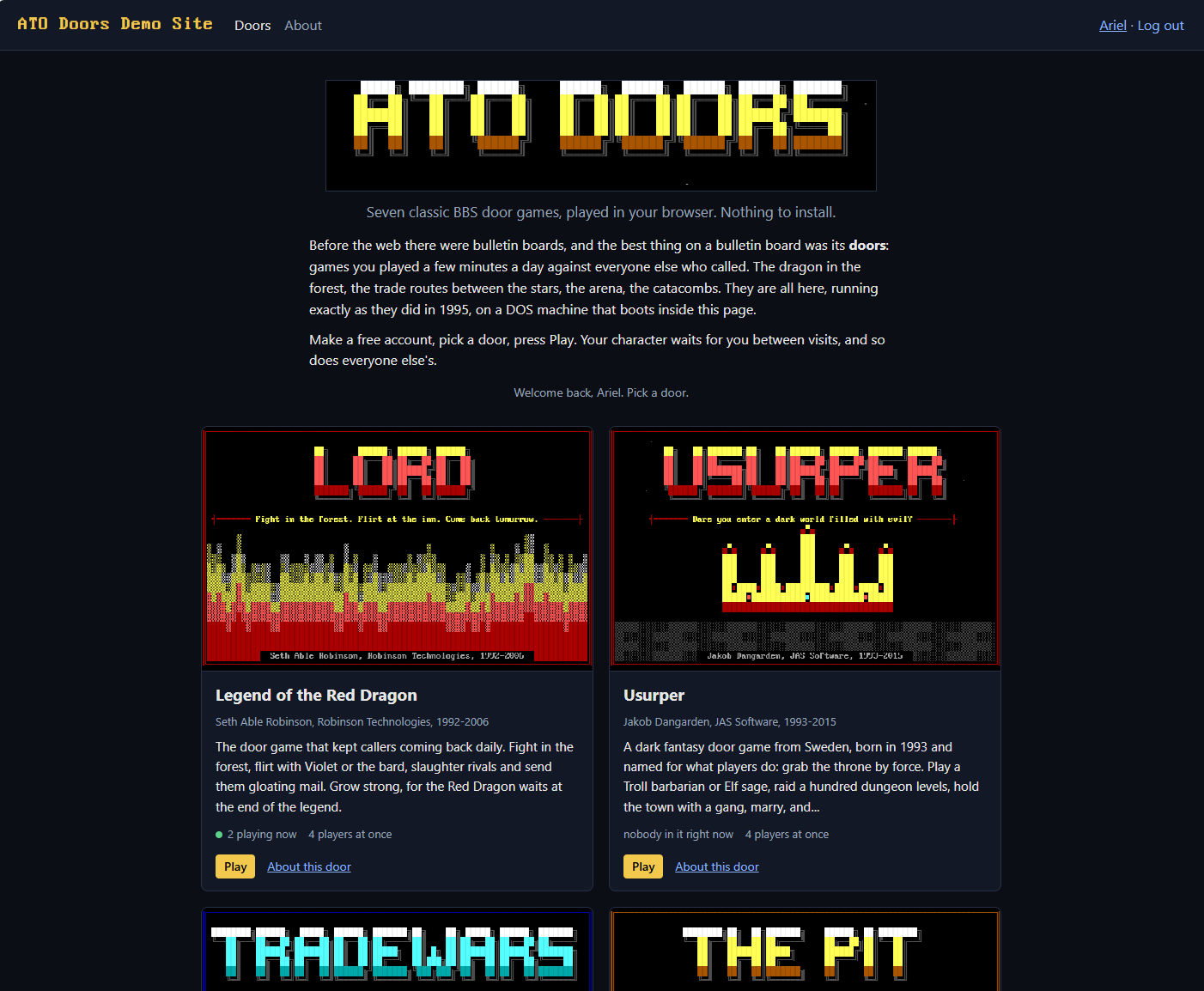
Yours can be anything. The landing page and every door page are configurable in the admin console, down to the text, the colors and the ANSI art, so no two ATO sites need look alike.
An account, a current desktop browser and a keyboard. No DOSBox, no telnet client, nothing to download.
Between visits, and so does everyone else's. Come back tomorrow and the world has moved on without you, the way it always did.
In the doors built for it, several players share a world at the same moment. They see each other, duel, trade and chat.
The doors
There are hundreds of door programs for 16-bit DOS, and they should all run here. ATO Doors ships no games: you bring the ones you own, or that their authors released, as you always did.
doors/
with a short manifest in ATDT's format
that says how it starts, and press Scan. Its own installer and configuration program run on
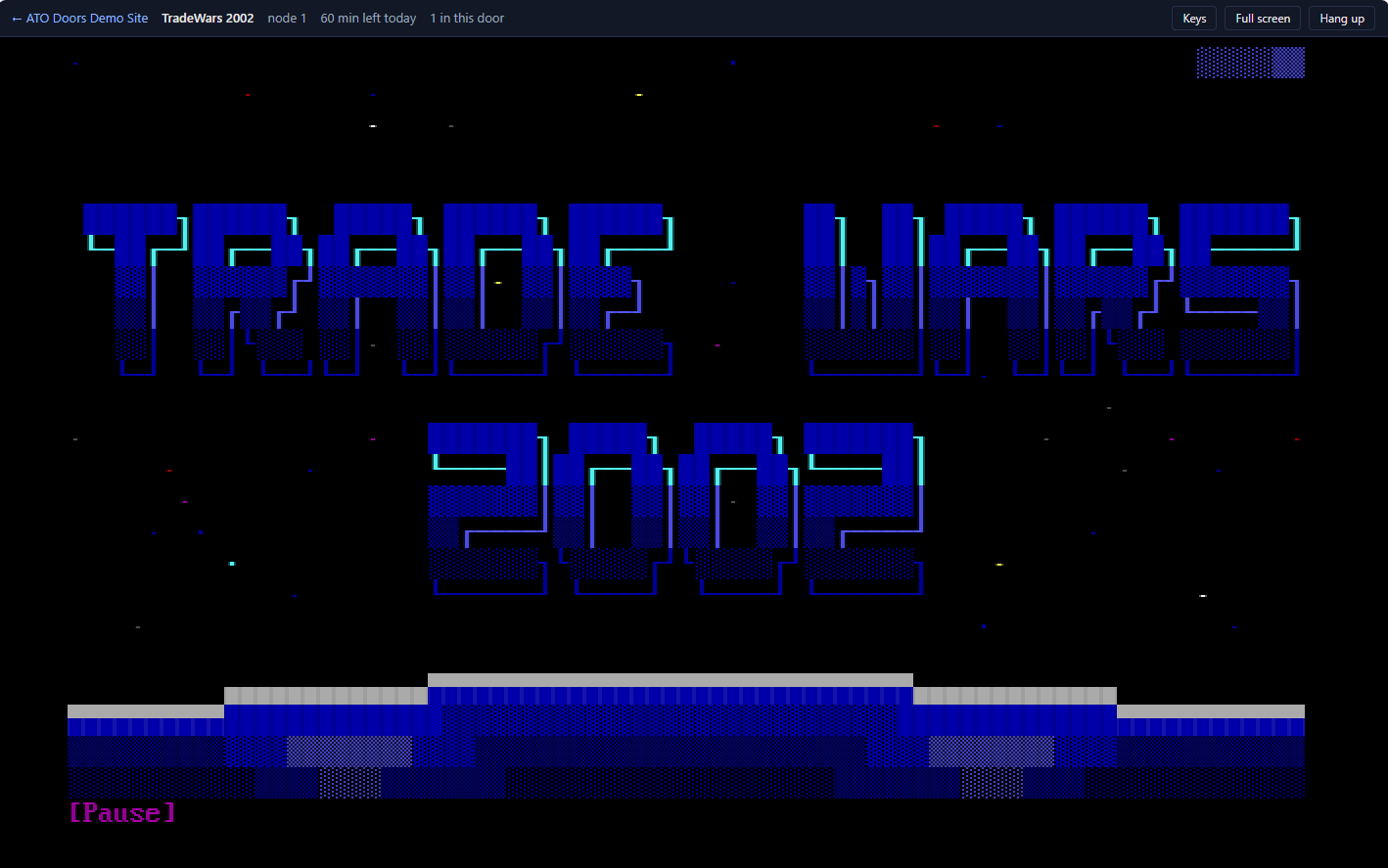
the Machine page, at a real DOS prompt.Seven of the hundreds, running today. Play the demo →
How it works
Press Play and the page starts a small emulated PC, boots FreeDOS from a floppy image, and wires its serial port to the terminal on your screen. The game runs on your own computer. Its world lives on the server, which reads and writes it the way a BBS node once read a file server.
A big door's files take about half a minute the first time. After that it starts in seconds.
As many players in a door as you allow, and the game sees them all.
Plain PHP and a SQLite database. No daemon to keep alive and no emulator to install, on the host or on anyone's computer.
The server arbitrates record locks, so two players writing the same world at the same moment get the result the game expects.
The 16-bit programs their authors shipped, not ports. Bugs, balance and humor included.
Maintenance
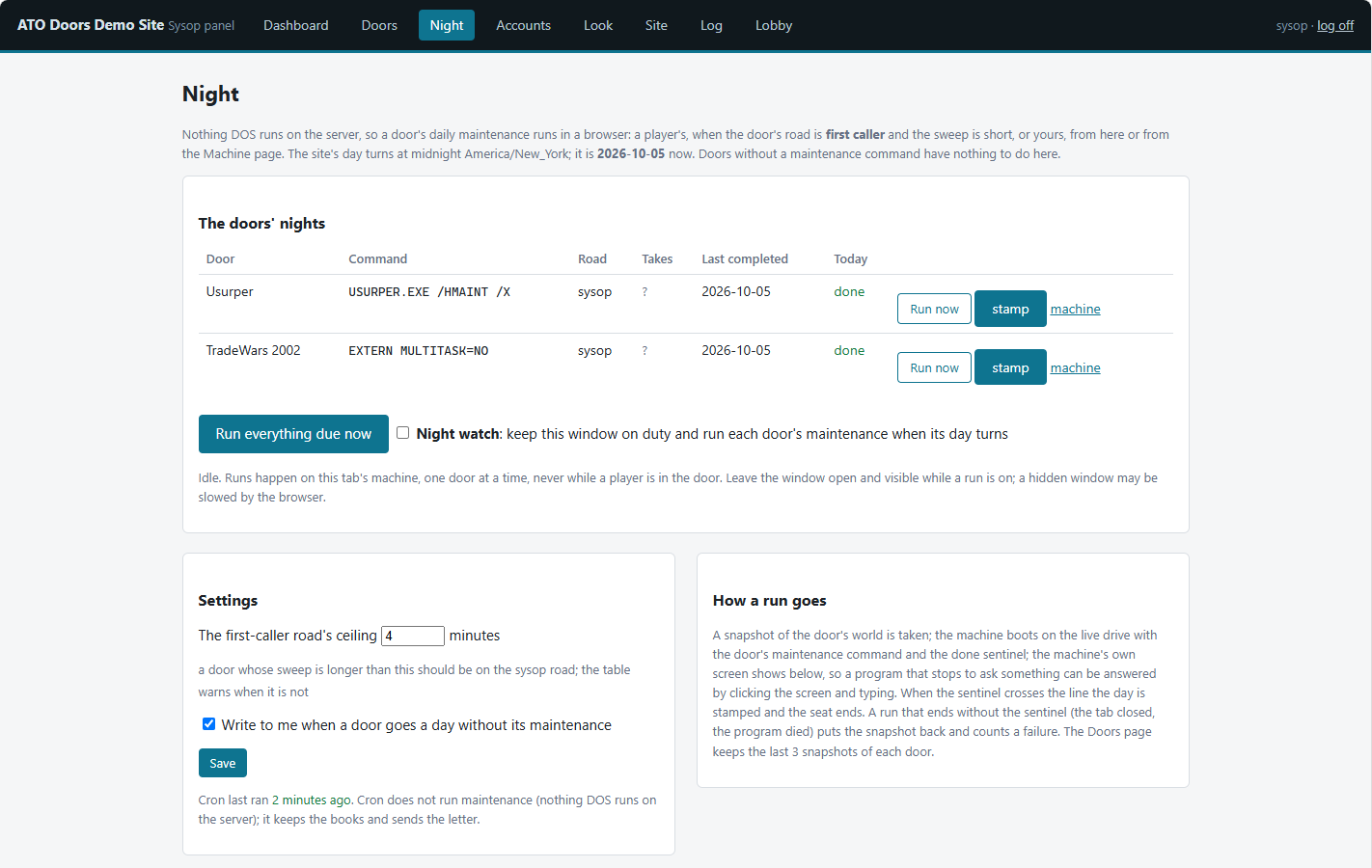
Door games were written for boards that ran a maintenance program once a day, at night. ATO Doors keeps the habit.
For the sysop
No server to administer. After the upload, everything happens in a web page, including the parts that used to need a DOS prompt.
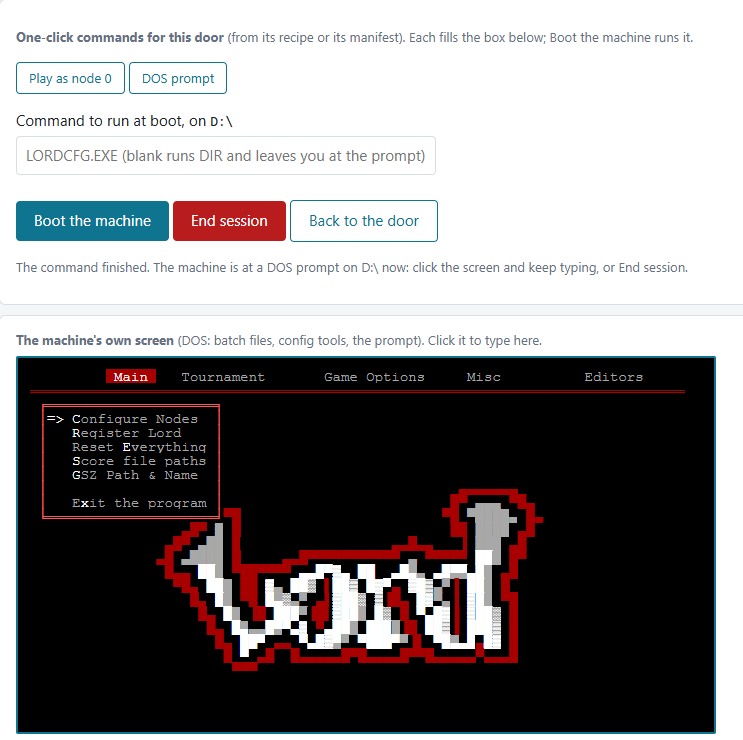
Type LORDCFG.EXE, press Boot, and the door's own configuration program comes up
against the live world, with the screen and keyboard facing you. Registration codes go in here.
Or play-test as node 0 without taking a player's seat.
Any 16-bit DOS door, set up by hand or from one of ATDT's packages, which install here as is.
For each door: who may play, how many at once, how many minutes a day, and which road its maintenance takes. The demo runs most doors at four players; set your own.
Open a door's text files from the panel and fix the line that needs fixing.
You write it: a blurb, a picture, credits, and a note to players.
Any door can be put back. A log records what every player's machine wrote, and when.
The landing page and every door page are yours to change: the wording, the colors, the ANSI art. All of it from the admin console.
Installing
When the download ships, installing is a four-step wizard. Updates are the new package laid over the old one; the site migrates itself.
Put the package in your web space and open it in a browser.
The wizard checks PHP and SQLite and says plainly what your host is missing.
Name the site and make your sysop account.
New players confirm their address by email, so the site needs a mail account to send from.
The game runs on the player's computer, so a player can write to a door's shared files whatever the game itself can write. Program and configuration files stay out of reach, every write is logged, and a snapshot or a Reset puts a door back. It is the same trust a BBS placed in its callers, made explicit.
The doors are their authors' own, limits included. An unregistered copy of a 1996 shareware door stops where it stopped in 1996. Phones are not a target either: a door wants eighty columns and real keys.
Download
ATO Doors will be free and MIT licensed, with no account and no telemetry: the launcher and a test door, no games. While the download is finished, the demo lobby is open. Make an account and play.
Why ATO
Each project is named for the Hayes modem command that does its job. ATDT dials out,
and ATA answers the ring. ATO is what you typed after +++ to put a call back on line
without dialing again, picking up right where you left off. ATO Doors does that for the doors:
ATDT's door machine, back on line on its own.
A modern bulletin board for shared hosting, with message bases, ANSI art, live chat and the same DOS door machine.
Available now · atdtbbs.com
A whole classic DOS board, installed in one click and callable from any browser.
Alpha · atabbs.com
A lobby, an account and the games, for a club, a classroom, or a Discord full of old callers.
◄ You are here
All three are free, MIT licensed, and built by one sysop who never quite hung up. Part of the BBS Preservation Project.